

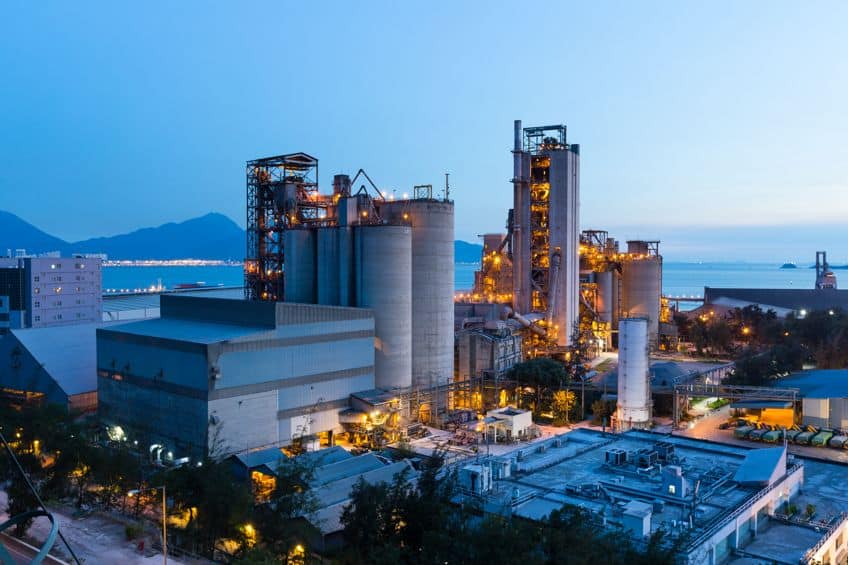
In the sprawling industrial districts of Singapore, where East meets West in ways that extend beyond geography, one can observe the quiet operations of a metal injection molding manufacturer – AMT, whose precision-engineered components tell a larger story about how contemporary capitalism has reconfigured global production.
To understand how we arrived at this moment, where microscopic metal powders flowing through injection moulds can reshape entire industries, requires examining the convergence of historical currents gathering force since the late twentieth century. The rise of “advanced manufacturing” represents more than technological evolution; it embodies a fundamental reorganisation of how power, knowledge, and material wealth circulate through global networks.
The Geopolitics of Precision
The metal injection moulding sector, valued at $5.07 billion globally in 2023 and projected to reach $10.83 billion by 2030, operates within what supply chain analysts have termed the “precision economy”, a realm where tolerances measured in microns translate directly into geopolitical advantages. Asia-Pacific commands 52.7% of this market not merely because of lower labour costs, but due to what manufacturing theorists call “systemic integration”, the ability to coordinate complex supply networks across multiple scales simultaneously.
Consider the implications of this geographic concentration:
- Raw material control: Metal powder feedstock production is increasingly centralised in Asian facilities
- Technological gatekeeping: Critical process knowledge concentrated in fewer hands
- Supply chain vulnerability: Western manufacturers are increasingly dependent on Asian precision capabilities
- Innovation cycles: R&D investment flowing toward established manufacturing clusters
This is not simply about comparative advantage in classical economic terms. It represents what historian Alfred Chandler Jr. might have recognised as “administrative coordination”, the systematic integration of technological capability with logistical networks on a planetary scale.
Manufacturing’s Environmental Contradictions
The sustainability narrative surrounding metal injection moulding reveals the contradictions of contemporary industrial capitalism. Proponents emphasise that “MIM uses up to 97% of material, translating into waste reduction” and enables “net-shape production” that minimises energy-intensive secondary machining. Yet this efficiency masks a more complex environmental calculus.
The sintering process requires temperatures approaching 1,400°C, whilst the debinding phase involves solvents and chemical processes that, while improved from earlier generations, still represent significant energy inputs. The industry’s environmental claims become particularly problematic when viewed through the lens of what economist John Bellamy Foster calls “metabolic rift”, the systematic disruption of natural cycles inherent to capitalist production.
The Medical-Industrial Complex
Perhaps nowhere is the political economy of advanced manufacturing more visible than in medical device production, where precision metal components become embedded within human bodies. “Metal injection molding’s capabilities are in alignment with the trend toward smaller, more compact medical devices,” notes industry analysis, but this technical development intersects with broader questions about healthcare access and technological sovereignty.
The concentration of medical device manufacturing capabilities in specific geographic nodes creates “systemic dependencies.” When surgical instruments, implants, and diagnostic equipment rely on components produced through these specialised processes, questions of industrial policy become questions of public health. “We hold ISO 9001, ISO 13485 and IATF 16949 certifications, assuring quality in medical, automotive, industrial, and electronics sectors,” explains documentation from Singapore-based operations, yet these certifications themselves represent a form of regulatory infrastructure that can exclude as well as include.
The Dual Nature of Technological Innovation
The technical capabilities emerging from contemporary metal injection moulding facilities demonstrate what economic historian David Noble identified as technology’s “dual character”, simultaneously expanding human capabilities whilst concentrating control over those capabilities. Consider the range of innovations now possible:
- Bi-material integrationenabling single components with multiple material properties
- Micro-geometriescreating internal features impossible through traditional machining
- Net-shape productioneliminating multiple manufacturing steps
- Multi-cavity toolingenabling mass production of complex components
These capabilities represent genuine advances in human productive capacity. Yet they also create new forms of technological dependence. Companies and regions that master these processes gain significant advantages, creating what economists call “innovation rents”, profits derived not from efficiency but from exclusive access to advanced capabilities.
Supply Chain Sovereignty and Industrial Strategy
The COVID-19 pandemic exposed the vulnerabilities inherent in globally distributed manufacturing networks, prompting what trade analysts call the “reshoring discourse.” Yet the response has not been so much a retreat from globalisation as its reconfiguration along lines that prioritise “strategic sectors.” Metal injection moulding, given its applications in defence, medical devices, and critical infrastructure, has become central to these discussions.
“The APAC region plays a crucial role in global supply chains, serving as a major supplier of components and finished goods,” observes market analysis, but this dominance creates what security analysts term “critical dependencies.” The Biden administration’s focus on “friend-shoring” and the European Union’s emphasis on “strategic autonomy” both recognise that control over advanced manufacturing capabilities has become a core element of state power.
The Future of Industrial Organisation
What emerges from examining the metal injection moulding sector is a picture of global capitalism in transition. The traditional model of comparative advantage, where countries specialised in what they could produce most efficiently, is giving way to something more complex: strategic competition over the technological capabilities that will define future industrial advantages.
The industry’s projected growth, 11.6% compound annual growth rate through 2030, reflects not just market demand but recognition that precision manufacturing capabilities represent a form of infrastructural power. Nations and corporations that control these capabilities can influence the development trajectories of entire sectors, from healthcare to defence to consumer electronics.
As we witness this reconfiguration of global manufacturing, the operations of facilities across Singapore and beyond take on significance that extends far beyond their immediate technical functions. They represent nodes in a network through which the future organisation of industrial society is being negotiated, one component at a time. This is the contemporary reality of a metal injection molding manufacturer – AMT, where precision engineering meets the broader currents of global political economy.